Can Your Thoughts Change Your Biology? What Neuroscience Actually Shows
Repeated thought patterns physically rewire the brain and shift the body's chemistry. What the evidence on neuroplasticity, stress mindset and emotion actually supports, and where the claims outrun it.
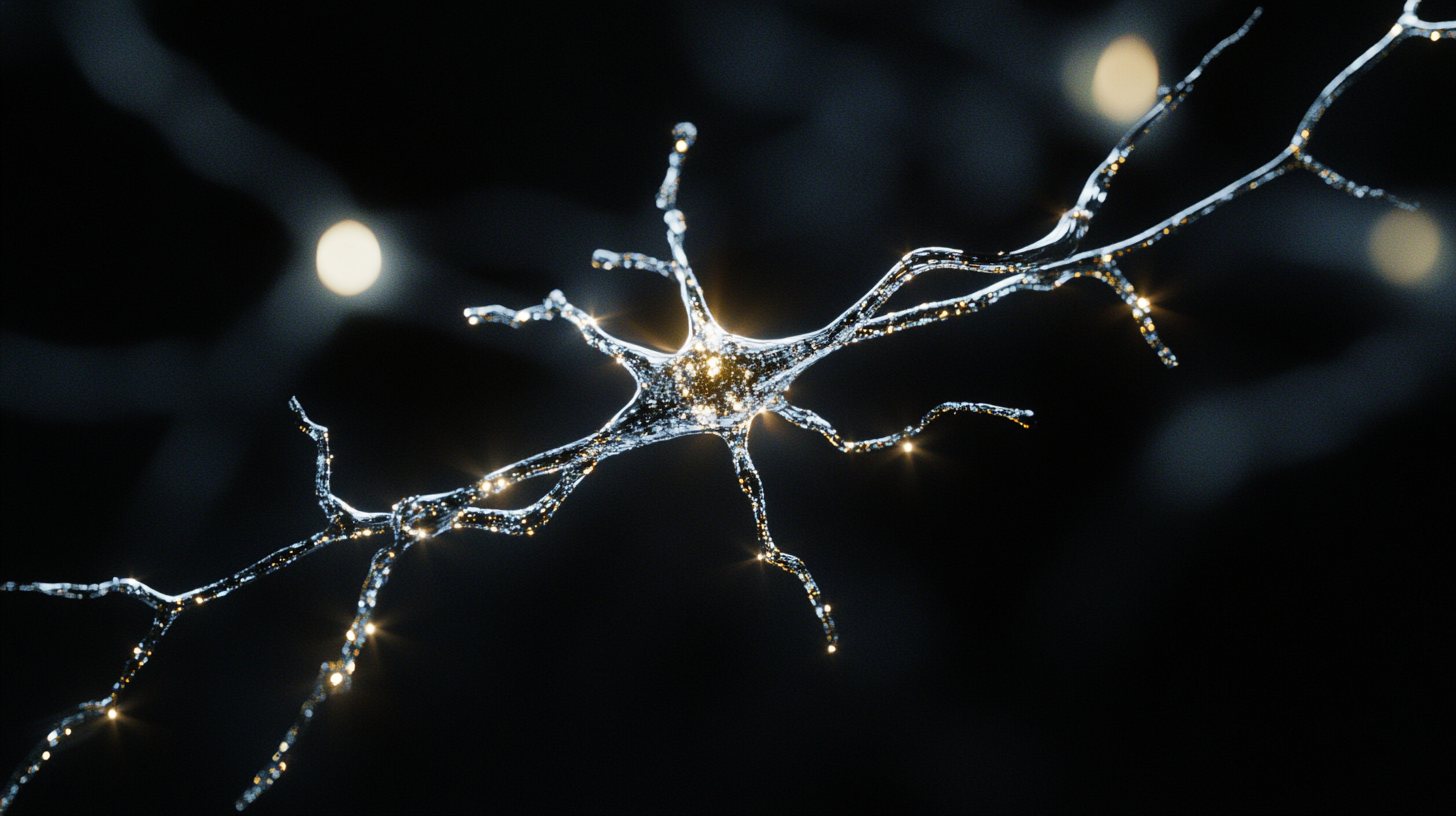
We treat thoughts as weightless, private events that happen inside us and stay there. They do not stay there. Repeated thoughts physically reshape the brain’s wiring, a process called neuroplasticity, and the emotional states they trigger release measurable cascades of hormones and neurotransmitters into the body. The evidence supports real, gradual influence of mental patterns on biology, though not the unlimited version popular culture sells.
How does a thought become chemistry?
A thought is a physical event: an electrical pattern that fires across networks of neurons and triggers chemical messengers. When the thought carries emotional weight, the body joins in. Fearful and anxious interpretation activates the sympathetic system and its chemistry, adrenaline and cortisol, tuning the body for threat. States of appreciation, safety and connection engage a different profile, associated with serotonin, dopamine and oxytocin, and with the parasympathetic state in which the body rests, digests and repairs. What happens when that switch stops working, and a nervous system stays locked in threat long after the danger has passed, is the subject of PTSD and physical pain
A popular version of this idea claims stress chemistry and calm chemistry cannot exist in the body at the same moment. That is tidier than the truth: emotions blend, and physiology is not a binary switch. What the research does support is direction and training: deliberately cultivating appreciative, calm states shifts the balance toward the parasympathetic side, and repetition lowers baseline reactivity over time. In one much-cited randomized experiment, Emmons and McCullough had participants keep a weekly gratitude journal versus a hassles journal; across studies spanning nine to ten weeks, the gratitude groups reported better wellbeing, fewer physical complaints and, in one study, more sleep.¹ A 2021 meta-analysis by Koncz and colleagues in Health Psychology Review pooled randomized trials of meditation and found reliable reductions in cortisol, strongest in stressed, at-risk groups.² Small effects, honestly earned, repeated daily, is exactly how biology changes.
Does repeated thinking really rewire the brain?
Structurally, yes, and this is among the best-established findings in modern neuroscience. Draganski and colleagues, in Nature, took adults who had never juggled, taught them for three months, and scanned their brains before and after: grey matter in motion-processing regions measurably expanded, then partially receded when practice stopped.³ Maguire and colleagues, in PNAS, famously found that London taxi drivers, who spend years memorizing the city, had enlarged posterior hippocampi, the navigation center, scaling with years on the job.⁴ The brain is not fixed hardware. It remodels around whatever it does repeatedly, and it does not distinguish between a repeated action and a repeated thought pattern: rumination is also practice.
This is why core beliefs matter so much. The deep assumptions we absorb early in life, largely before age ten, from events, authority figures and repetition, become the lens through which every experience is interpreted, and each use of the lens strengthens its wiring. The hopeful side of neuroplasticity is that the same mechanism runs in reverse: new interpretations, practiced deliberately, gradually become the new default. That is, at bottom, how cognitive behavioral therapy works.
Can changing an interpretation change the stress response?
Here the evidence is direct. Crum, Salovey and Achor, in the Journal of Personality and Social Psychology, ran three studies on what they called stress mindset: the belief that stress is enhancing versus debilitating. The mindset could be shifted with short videos, and people holding the stress-is-enhancing view showed better mood, better work performance and more adaptive physiological stress profiles, moderate rather than exaggerated cortisol reactivity, under identical pressure.⁵ Same events, different interpretation, different body. It connects to what we saw in is stress bad for you?: the harm is not in the arousal itself but in the story the system tells about it and the failure to come down.
What this looks like in practice, in the forms the research actually tested:
- Gratitude practice: a short, regular written practice of naming what is good, the protocol behind the Emmons and McCullough findings¹
- Meditation: trains attention away from automatic threat interpretation, with measurable cortisol effects in trials²
- Reappraisal: deliberately reinterpreting arousal or difficulty, the mechanism in the mindset studies⁵
- Movement: exercise reliably shifts mood chemistry and is one of the fastest levers available
What did the tradition know about the power of thought?
Rambam wrote in twelfth century Egypt as both a jurist and a working court physician, and he opens his chapter on caring for the body with a claim that still sounds strange: since having a body that is healthy and whole is among the ways of God, because it is impossible to understand or know anything of the Creator while one is ill, a person is therefore obliged to keep away from whatever destroys the body.⁶ What follows in that passage is strikingly practical, mostly rules about eating only when hungry and drinking only when thirsty. But the premise underneath it is not practical at all. Health is not a private preference in that account. It is a precondition for thought itself.
He extends the logic earlier in the same work, and this is the part that bears on core beliefs. The physically ill taste the bitter as sweet and the sweet as bitter, he writes, and some crave what is not food at all, earth or charcoal, while refusing bread and meat. Those whose souls are ill work the same way: they come to desire bad ideas and to hate the good path, and walking it feels heavy to them in proportion to how ill they are.⁷ His prescription is not willpower. It is consultation. Go to the wise, he says, who are the physicians of souls, and they will treat the illness by teaching. That is a striking anticipation of what cognitive therapy would formalise eight centuries later: the way a person reads a situation is itself the thing to be treated, and it usually takes another person to see it clearly.
Reading Rambam alongside neuroplasticity research is our synthesis rather than his argument. He was describing moral formation, not synaptic change, and he had no way to see a hippocampus thicken. But the direction he pointed is the one the evidence keeps confirming: the patterns we practise become the person we are, and the body is never a bystander to that.
This article is educational and is not a substitute for individual medical advice. It describes practices for general understanding only. Astrela does not recommend, endorse or advise against any specific practice, product or intervention. Before starting anything new, especially anything invasive or unregulated, consult a qualified clinician who knows your situation.
Frequently asked
Can thinking positively actually change my body?
To a measurable degree, yes, through real physiological channels: repeated mental patterns reshape brain structure over time, appraisals shift stress hormone responses, and practices like gratitude journaling and meditation show effects on wellbeing and cortisol in controlled studies. The changes are real but gradual and modest, not miraculous.
Is it true you cannot feel stress and gratitude at the same time?
Not literally; emotions blend, and the popular claim that stress and calm chemistry cannot coexist is an oversimplification. What the evidence does support is that deliberately practicing calming, appreciative states activates the rest side of the nervous system and, with repetition, lowers baseline stress reactivity.
What are core beliefs and can they be changed?
Core beliefs are deep assumptions about self and world, largely formed early in life, that filter how we interpret events. They can be changed; identifying and revising them is the central mechanism of cognitive behavioral therapy, one of the best-validated psychological treatments, and neuroplasticity research explains why repetition of new patterns gradually makes them the brain's default.
Does this mean illness is caused by negative thinking?
No. Thought patterns are one input into health among many, alongside genetics, environment and chance. The research shows meaningful influence, not control. Using this knowledge as self-blame, or as a substitute for medical care, misreads the science.
References
- Counting blessings versus burdens: an experimental investigation of gratitude and subjective well-being in daily life (Emmons and McCullough, 2003) · Journal of Personality and Social Psychology
- Meditation interventions efficiently reduce cortisol levels of at-risk samples: a meta-analysis (Koncz, Demetrovics and Takacs, 2021) · Health Psychology Review
- Neuroplasticity: changes in grey matter induced by training (Draganski et al., 2004) · Nature
- Navigation-related structural change in the hippocampi of taxi drivers (Maguire et al., 2000) · Proceedings of the National Academy of Sciences
- Rethinking stress: the role of mindsets in determining the stress response (Crum, Salovey and Achor, 2013) · Journal of Personality and Social Psychology, 2013;104(4):716-733
- Mishneh Torah, Hilchot De'ot 4:1 (Rambam, Maimonides, twelfth century) · Sefaria
- Mishneh Torah, Hilchot De'ot 2:1 (Rambam, Maimonides, twelfth century) · Sefaria